
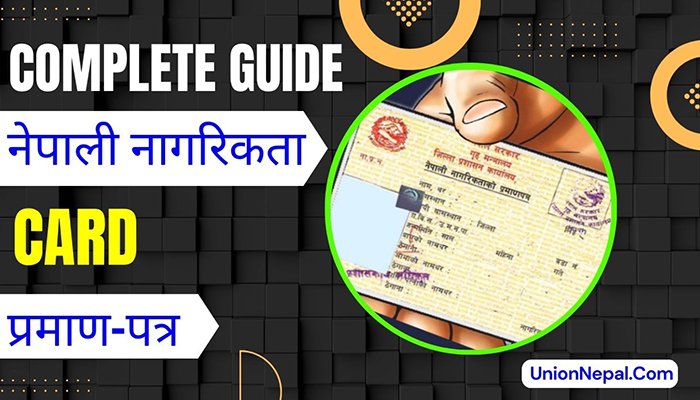
Nepali Citizenship Card – Complete Guide To Types, Documents & Application Process – Online Check 2026
Nepali Citizenship Certificate (Nagarikta Praman-Patra) is the most important legal document for every Nepali national.
Whether you are opening a bank account, applying for a passport, buying property, enrolling in higher education or casting a vote – your Nepali citizenship card is the foundation of all government services and legal rights in Nepal.
This guide covers everything about Nepal citizenship in 2026 – types, eligibility, required documents, step-by-step application process, online check, certificate details and the latest 2082/083 legal changes.
Also Helpful : Non-Resident Nepali (NRN) Citizenship Complete 2026 Guide
Quick Reference: Nepali Citizenship At A Glance
Minimum Age: 16 Years (Citizenship By Descent Or Birth).
Governing Law: Nepal Citizenship Act, 2006 (2063 B.S.) And Fourth Amendment Rules 2082
Issuing Authority: Chief District Officer (CDO) / District Administration Office (DAO)
Key Types: By Descent, By Birth, Naturalized, Honorary
Application Starts At: Local Ward Office (For Recommendation Letter / Sifarish Patra)
Processing Time: Same-Day To 2 Working Days If Documents Are Complete
What Is A Nepal Citizenship Certificate?
A Nepal citizenship certificate is the official document issued by the Government of Nepal recognizing a person as a Nepali citizen. It is governed by.
- Constitution of Nepal, 2015 (Articles 10-14).
- Nepal Citizenship Act, 2006 (2063 B.S.) – amended up to 2082.
- Nepal Citizenship Rules, 2006 – including the Fourth Amendment 2082.
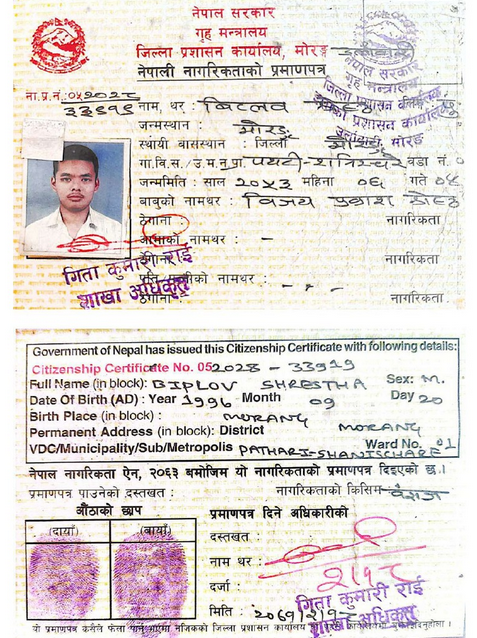
Under Article 10 of the Constitution, citizenship is a fundamental right. The certificate contains your full name, date of birth, permanent address, photograph, parent’s names, gender identity and a unique citizenship number – recognized across all government agencies in Nepal.
Types Of Citizenship In Nepal
Nepal recognizes 4 main types of citizenship. Understanding your type is the essential first step.
1. Citizenship By Descent (Vamshaja Nagarikta)
The most common type. A person is entitled to citizenship by descent if, at the time of birth, either parent was a Nepali citizen. Available from age 16 onwards.
- No specific residence period required – parental link is sufficient.
- Applies regardless of where the child was born.
- 2082 Amendment – A child may apply using only the mother’s name if the father is unidentified or deceased before obtaining citizenship
2. Citizenship By Birth (Janma Siddha Nagarikta)
A historical category for persons born within Nepal before Chaitra end 2046 B.S. who have been continuously residing in Nepal.
Not available for new applicants born after 2046 B.S. Everyone born after that date obtains citizenship through descent or naturalization.
3. Naturalized Citizenship (Angikrit Nagarikta)
Granted to individuals who do not qualify by descent or birth. Key sub-categories.
- Foreign woman married to a Nepali male citizen – requires valid marriage certificate and proof of initiating foreign citizenship renunciation.
- Child of a Nepali mother and foreign father, permanently residing in Nepal with no foreign citizenship – requires SoGhoshana (Sworn Declaration)
- Child born abroad to a Nepali mother with unknown father, residing in Nepal – both mother and child must submit SoGhoshana.
- Person with special contributions to Nepal (science, arts, sports) – minimum 15 years residence, language proficiency and renunciation of foreign citizenship required.
4. Honorary Citizenship (Sammanaarttha Nagarikta)
A ceremonial recognition conferred by the Government of Nepal (on Council of Ministers recommendation) to foreign nationals who have rendered extraordinary service to Nepal.
Does not carry full civil rights such as voting or property ownership. No application required – it is government-initiated.
Nepal Citizenship Eligibility – Who Can Apply?
| Citizenship Type | Who Qualifies & Key Requirement |
| By Descent | Person aged 16+ with at least one Nepali citizen parent |
| By Birth | Born in Nepal before Chaitra 2046 B.S. with continuous permanent residence |
| Naturalized – Married | Foreign woman married to Nepali male – valid marriage registration + renunciation initiation |
| Naturalized – Child of Nepali mother | Child of Nepali mother & foreign father – permanent residence + no foreign citizenship + SoGhoshana |
| Naturalized – Child born abroad | Born abroad to Nepali mother – residing in Nepal + unknown father + SoGhoshana by mother & child |
| Honorary | Foreign national with exceptional contribution to Nepal – government conferred, not applied for |
Documents Required To Make Citizenship In Nepal
The documents needed depend on your citizenship type. Below is the complete breakdown per category.
Standard Documents – Citizenship By Descent (Both Parents Nepali)
| Document | Details |
| Birth Certificate | Original Janma Darta Praman-Patra – primary & mandatory document |
| Parents Citizenship | Photocopies of both parents citizenship certificates – bring originals for verification |
| Ward Office Recommendation | Sifarish Patra confirming birthplace, parental relationship & permanent address |
| Passport-Size Photos | 3-4 recent photos – white background, ears visible, neutral expression (35mm x 45mm) |
| Academic Certificate | SLC/SEE or equivalent – to verify name spelling and date of birth |
| Migration Certificate | Only required if you moved permanently from another district |
| Marriage Certificate | Required for married female applicants who wish to include husband’s name/address |
| Guardian Presence | At least one parent must be physically present at DAO for identity verification (Sanaakhat) |
Additional Documents – When One Parent Is Deceased
- Death certificate (Mrityu Darta Praman-Patra) of the deceased parent.
- If deceased parent’s citizenship is unavailable – voter ID, family registration or local authority testimony may be accepted.
Documents – Mother-Based Citizenship (Father Unidentified)
Under the Nepal Citizenship Act Second Amendment 2082, a child born to a Nepali mother whose father cannot be established is entitled to citizenship by descent through the mother.
- Birth certificate of the applicant.
- Mother’s citizenship certificate.
- Ward Office recommendation letter.
- SoGhoshana (Sworn Declaration) – signed by both applicant and mother before the CDO, confirming the father’s identity is unknown.
- 3-4 passport-size photographs.
Nepali Citizenship Photo Size And Requirements
- Size: 35mm x 45mm (3.5cm x 4.5cm) – passport size
- Background: Plain white
- Face: Front-facing, both ears clearly visible, no sunglasses or hat
- Expression: Neutral – no wide smile or squinting
- Quality: Sharp, in focus – use a professional studio, not home printer
- Quantity: Prepare 4 copies
How To Apply For Nepali Citizenship – Step-By-Step Process
Step 1: Ward Office (Wada Karyalaya)
- Collect the citizenship application form – free of charge. Fill it accurately, cross-checking against your birth certificate and parents citizenship.
- Attach photocopies of all required documents (with originals) and submit to the Ward Office counter.
- Ward Office verifies your identity, confirms your permanent residence and parental relationship and issues the Sifarish Patra (recommendation letter). This typically takes same-day to 1-2 working days.
Step 2: District Administration Office (DAO / CDO Office)
- Book an online token appointment at your DAO’s official website (required in Kathmandu and most major districts). Note your token number and bring the confirmation.
- Visit the DAO on your appointed date with all original documents, photocopies, Sifarish Patra, photos and at least one parent.
- Parent/guardian identity verification (Sanaakhat) – one parent must be physically present. If both parents are unavailable, a close relative with Nepali citizenship may accompany you. For single-mother cases with unidentified father, the CDO may use police verification.
- CDO or authorized officer signs and stamps the citizenship certificate. With complete documents, you receive it the same day. If additional verification (Sarjaamin) is needed, it may take 2-5 extra working days.
Applying From A Different District
You can apply in your current district of residence. Bring a migration certificate (Basha Sarai Praman-Patra) from the Ward Office of your previous permanent address.
Your current Ward Office issues the Sifarish and your current DAO issues the certificate.
Special Cases – Married Women
- Option 1: Keep father’s name and address on citizenship (maiden citizenship unchanged).
- Option 2: Update citizenship with husband’s name after marriage – requires marriage registration certificate and Ward Office Sifarish from husband’s area.
- For Divorced Women: Present divorce certificate (Sambandha Viched Praman-Patra) and Ward Office recommendation to revert to maiden name and parents’ address.
Minors Identity Card (Nabalik Parichaya Patra) – New In 2082/083
The Fourth Amendment Rules 2082/083 introduced the Minors Identity Card (Nabalik Parichaya Patra) under Rule 16-Ka a significant step for children under 16 who previously had no official government ID.
| Detail | Information |
| Who Can Get It | Children under 16 years of age |
| Documents Required | Birth certificate + at least one parent’s citizenship + Ward Office recommendation |
| For Orphanage Children | Institution recommendation + local government Surjaamin (identity verification) |
| Issuing Authority | Ward Office |
| Validity | Until the child reaches 16 years of age |
| Cost | No fee (currently) |
Nepali Citizenship Online Check – How To Verify
Nepal’s Department of National ID and Civil Registration (DONIDCR) and Ministry of Home Affairs are building online verification systems. Currently available methods.
- National ID Card Enrollment – your citizenship number is the basis of NID registration, verifiable through the NID portal.
- Voter Enrollment Check – verify voter registration status using citizenship number at election.gov.np
- Direct Inquiry At Your DAO – for authenticating a citizenship certificate, contact the issuing District Administration Office.
Important: A full nationwide online citizenship verification portal is not yet operational as of 2026. Be cautious of third-party websites claiming to offer ‘Citizenship Number Check’ services – always use official government sources.
How To Translate Nepali Citizenship Into English
Nepal citizenship certificates are issued exclusively in Nepali (Devanagari Script). For international use – university applications, immigration, overseas employment or foreign bank accounts – you need a certified English translation.
- Engage a registered notary public (notary) in Nepal to translate and certify the document.
- Standard Fee: approximately NRs. 150-200.
- Notary offices are widely available in Kathmandu (Putali Sadak, Baneswor, New Road) and all 77 district headquarters.
- The notarized translation includes all data from both the front and back sides, with the notary’s stamp confirming accuracy.
Common Mistake: Always translate and notarize Both sides of the citizenship certificate. A partial translation (front only or back only) will be rejected for official international purposes.
Lost Or Duplicate Citizenship Certificate – What To Do
Losing your Nepal citizenship certificate is serious, but obtaining a duplicate (Pratilipi) is straightforward if you follow these steps.
- File a police report at the nearest police station – get a copy of the missing document report (Haraaeko Praman-Patra Ko Biwaran / Chalaan).
- Obtain Ward Office recommendation – submit police report and request a Sifarish letter for duplicate citizenship.
- Apply at the DAO where original citizenship was issued (or current permanent address DAO) – submit police report, Ward Office recommendation any photocopy of old citizenship, photos, and a formal application.
- Receive duplicate certificate – marked as duplicate but carries the same legal validity as the original.
Note: If your name or details have changed since the original (e.g. due to marriage, divorce or court order) bring the supporting documents to incorporate corrections during the duplicate application.
Nepal Dual Citizenship – Is It Allowed?
No. Nepal does not recognize dual citizenship. Under Section 10 of the Nepal Citizenship Act, a Nepali citizen who voluntarily acquires foreign nationality automatically loses Nepali citizenship from that date – by operation of law, without any court proceeding.
- Voluntary Renunciation: A Nepali citizen can renounce citizenship at a Nepali embassy/consulate abroad by submitting original citizenship certificate, passport, photos and a written application in person.
- Dual Citizenship At Birth: If a person acquires both Nepali and another country’s citizenship at birth, they must choose which to retain before age 18 (within 2 years from their 16th birthday). If no formal choice is made, Nepali citizenship lapses automatically.
- Re-Acquisition: Former Nepali citizens who later renounce their foreign citizenship may re-acquire Nepali citizenship by applying at the DAO with proof of renunciation (under Section 11 of the Act).
Latest Legal Changes – Nepal Citizenship (2082-083) B.S.
| Legal Instrument | Key Change |
| Nepal Citizenship Second Amendment Act 2082 (Effective Ashoj 5, 2082) | • Codified citizenship by descent through mother when father’s identity cannot be established. • Added Section 3(N)(5-Ka) for children of deceased parents. • Added Section 5(5-Kha) for children born abroad to Nepali mothers with unknown fathers. • Added Section 8-Ka: applicant may request one parent’s name omitted from certificate. |
| Nepal Citizenship Fourth Amendment Rules 2082 (Effective Poush 21, 2082) | • Introduced SoGhoshana format (Schedule 7-Kha) for unidentified father cases. • Introduced Rule 16-Ka for Minor’s Identity Card. Clarified orphan citizenship process. • Transferred naturalized citizenship issuance authority from Ministry of Home Affairs to CDOs – decentralizing and speeding up the process. |
Legal Disclaimer: This article is provided for general educational and informational purposes only. Based on the Nepal Citizenship Act 2006 (2063 B.S.) and the Fourth Amendment Rules 2082. The information is accurate to the best of our knowledge as of early 2026. Laws and procedures may change. This does not constitute legal advice. For advice specific to your circumstances, consult a registered advocate or contact your District Administration Office directly.